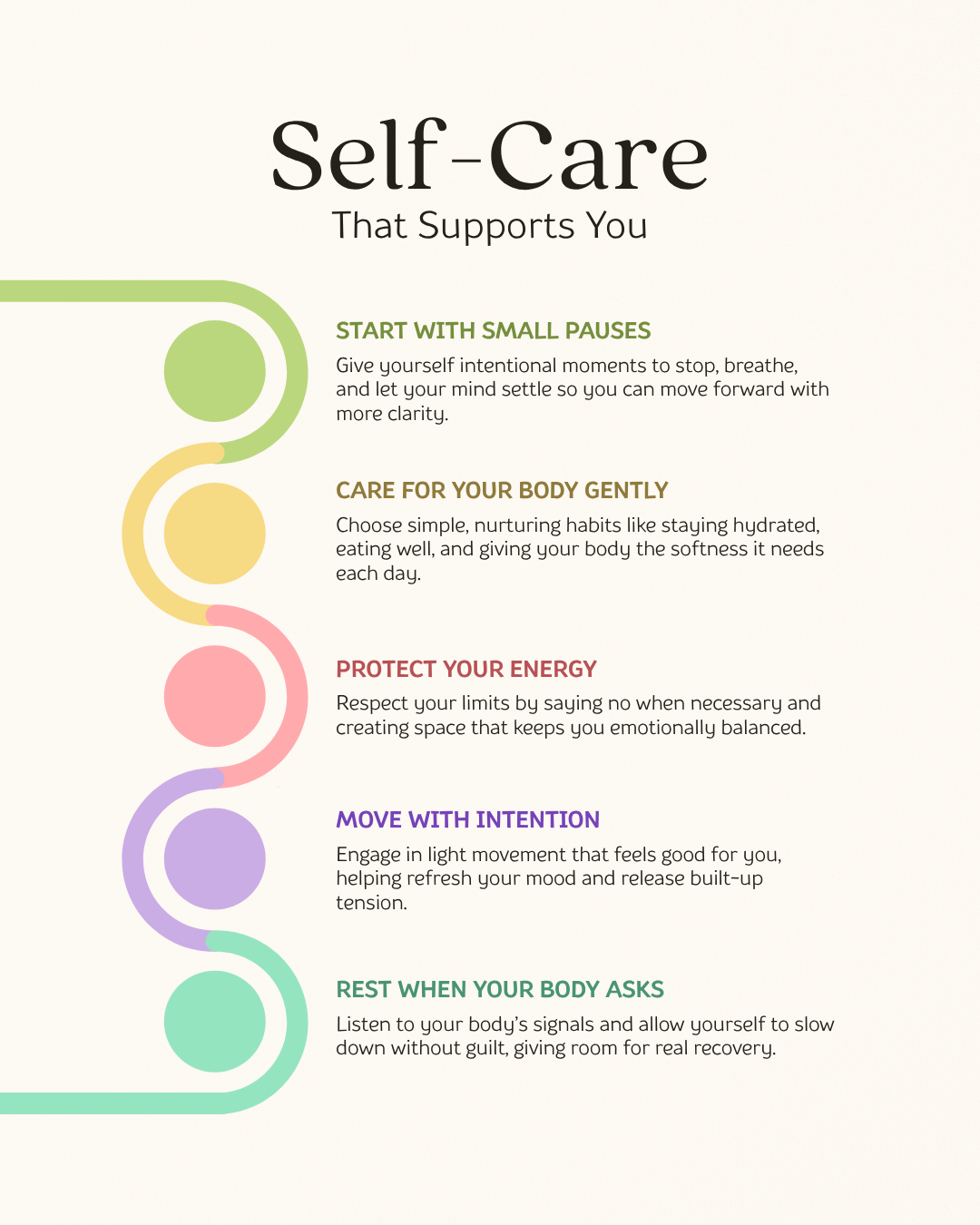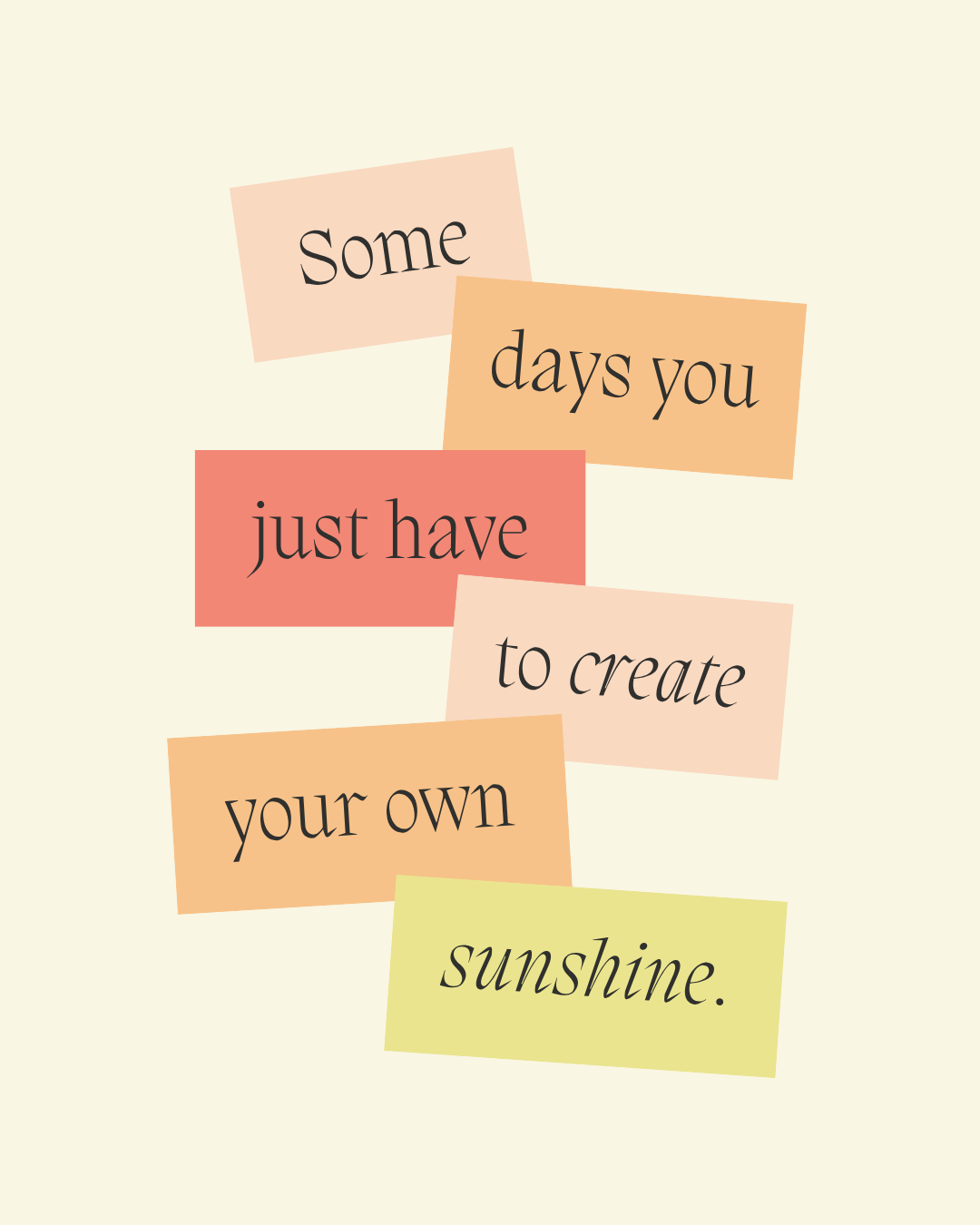





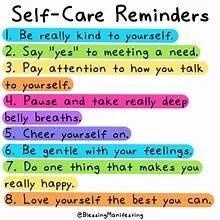
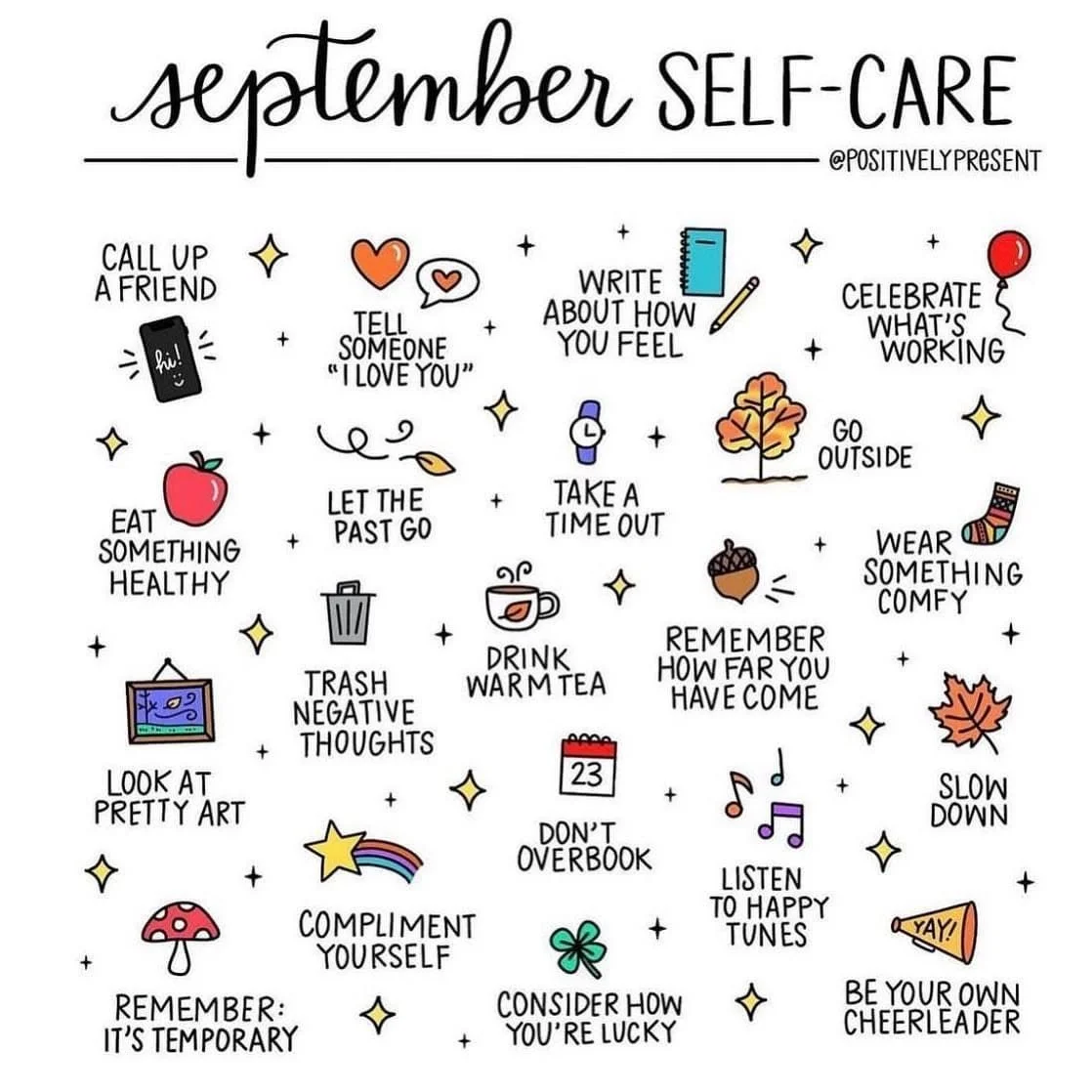
Self Care
Suicide Prevention Month
Learn the warning signs of suicide for the people in your life, and for yourself. Changes in mood, sleep, or behavior; withdrawing from others; talking about having no reason to live: samhsa.gov/mental-health/suicidal-behavior/warning-signs
#SPM2026 #SuicidePrevention #SupportMatters
17 Tips to September Love and Gratitude Be receptive to September's Serendipity; embrace love, embrace life.
Be receptive to September's Serendipity; embrace love, embrace life.
Whenever that glorious harvest moon welcomes September, I am reminded of an old movie called Moonstruck. It was about love. However, today September took on a new meaning as I looked at the happy faces of nieces and nephews on their first day of school. And in neighborhoods around Boston, students are unpacking and settling into new apartments.
As I prepare for my own class of incoming freshman, I decided that their journal writing exercise should be on love and gratitude.
“But you might end up with students pouring their hearts out on the love they left behind,” said one colleague. “Maybe a less emotional topic,” she suggested.
In thinking of love and gratitude, I realize that for many people there is a special affinity to art, music, a hobby, a place. My world has many loves—from children and family to my special writing place at the Boston Athenaeum. I walk through the floors of books, paintings, and sculptures and say to myself, "I just love it here." How grateful I am to Serendipity for bringing me into a creative enclave brimming with history and energy.
Nonetheless, I reminded myself of the author of Love, Dr. Leo Buscaglia. Two of his quotes still resonate:
"What love we've given, we'll have forever. What love we fail to give, will be lost for all eternity."
"Love is life. If you miss love, you miss life."
As such, I may ask students to focus on a special person in their lives.
17 tips to embrace love, embrace life with gratitude
1. Begin your day with a thank you. If you are with someone special when you awake in the morning, simply say, “Thank you for being here. I love you.” And if you are alone, look out your window and say, “Thank you, world. I love you.”
2. Remind yourself that gratitude is an attitude, not a feeling. Keep expressing gratitude and you will eventually become more grateful.
3. Write a love note to someone special – the love of your life, parents, children, friends -- to tell them what they mean to you. Then buy a stamp and send it via the US Mail. Here's a simple start: "I am so grateful to you for being in my life. I can think of a million reasons, but here are the top three."
4. Set aside time to give the gift of listening to share with someone special. Make a date if you must, in your own home or at a quiet little place in the neighborhood for coffee or a drink and just listen to one another “think out loud.”
5. Take walks without listening to music. Revel in the neighborhood and express gratitude for wherever it is you happen to be.
6. Breathe in September breezes and take a long walk with someone you love.
7. Go to an outdoor concert and when the music lifts you, thank whomever it is you are with. And if you are with your love, pack on that public display of affection.
8. Send flowers to someone for no reason at all – it is an act that will awaken your spirit of gratitude.
9. Find a picture of yourself smiling happily, frame it or put it up on the refrigerator with a note that says, "I embrace joy.” If you do have a special love, put a picture up of the two of you with a note that says, “I love the joy we share.”
10. Take a jar or basket and fill it with love quotes and gratitude quotes. And if you can’t think of any, Italian Baci come wrapped in silver and each kiss has a love note inside the wrapping.
article continues after advertisement
11. Collect laugh out loud cards to send to friends. When you are feeling blue, these will be a pick me up – especially to friends away at school.
12. Tell someone who has hurt you that you are sorry, even if he or she is at fault. It makes you the bigger and more loving person.
13. Make a decision to bring romance into your life. You will feel healthier because you will sleep better, smile more often, and your joy will be contagious.
14. Appreciate the value of laughter; it is one of the best-kept secrets to lasting love.
15. Memorize the ways that gratitude can bring back your smile on days when love and joy seem to elude you.
16. Learn to train your brain for gratitude. Dr. Loretta Graziano Breuning says that you can create a neural pathway in your brain if you work at it consistently for at least 45 days.
17. Keep your mind free of clutter and anger so when September's Synchronicity greets you, you will be receptive to its gift.
Be grateful for September with it's glorious sunsets, gentle breezes, and the vibrant colors of changing leaves.
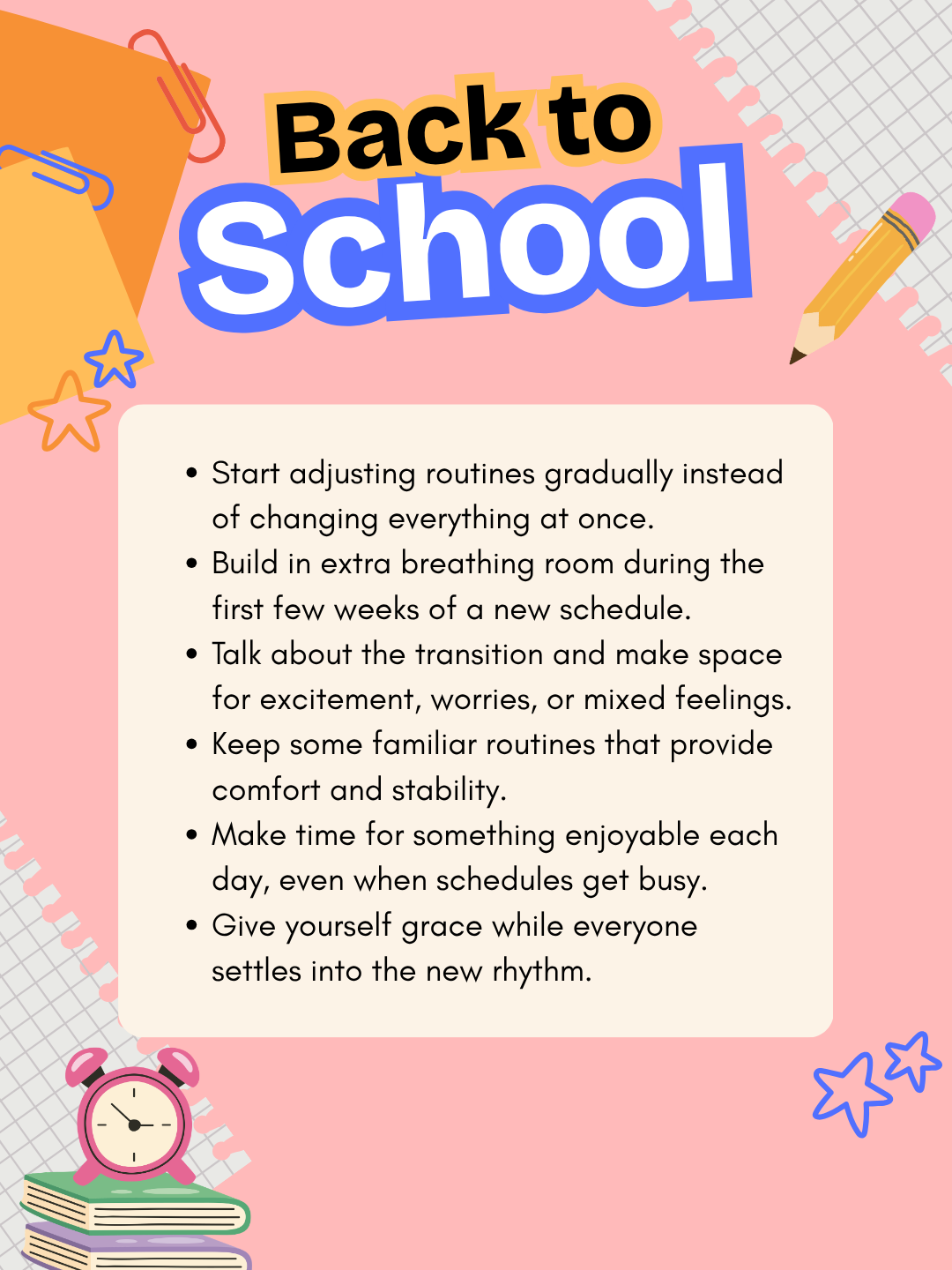
Back to School
Back-to-school transitions can affect adults too, especially parents and caregivers, so give yourself permission to ease into the new routine rather than expecting an instant adjustment.
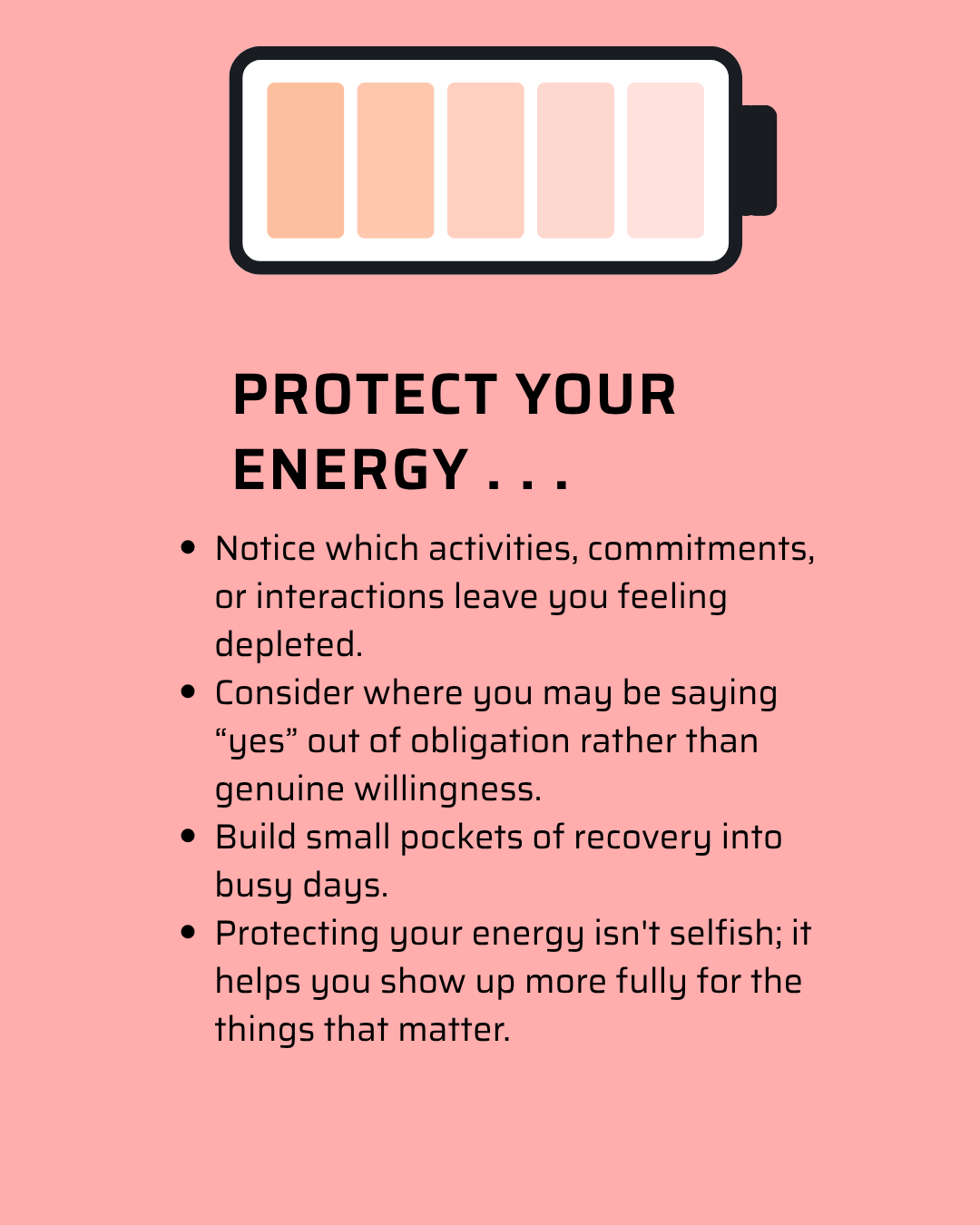
Protect Your Energy
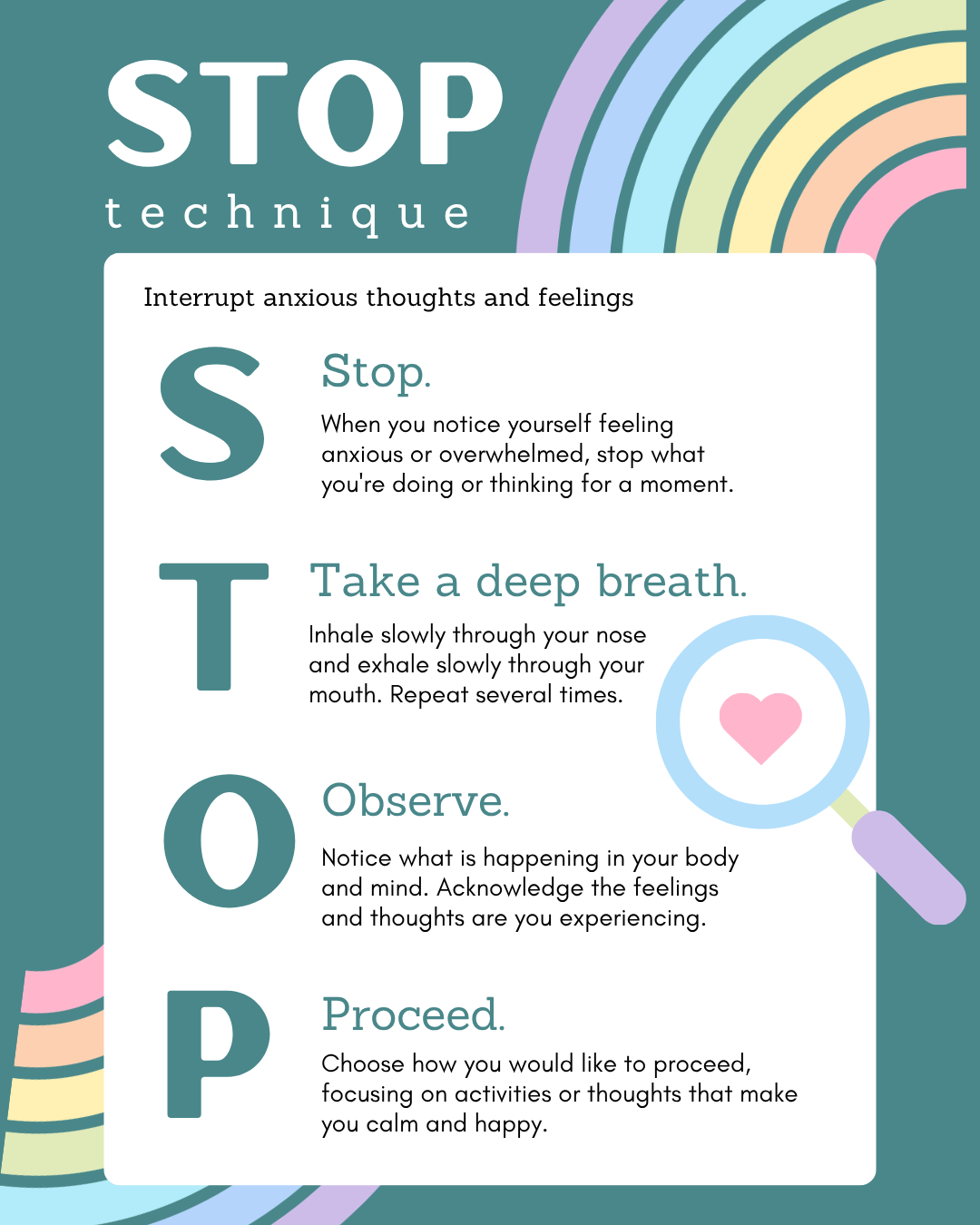
STOP Technique
Feeling overwhelmed or caught in an emotional moment? The STOP technique is a simple mindfulness tool that can help you pause, check in with yourself, and respond more intentionally instead of reacting on autopilot.
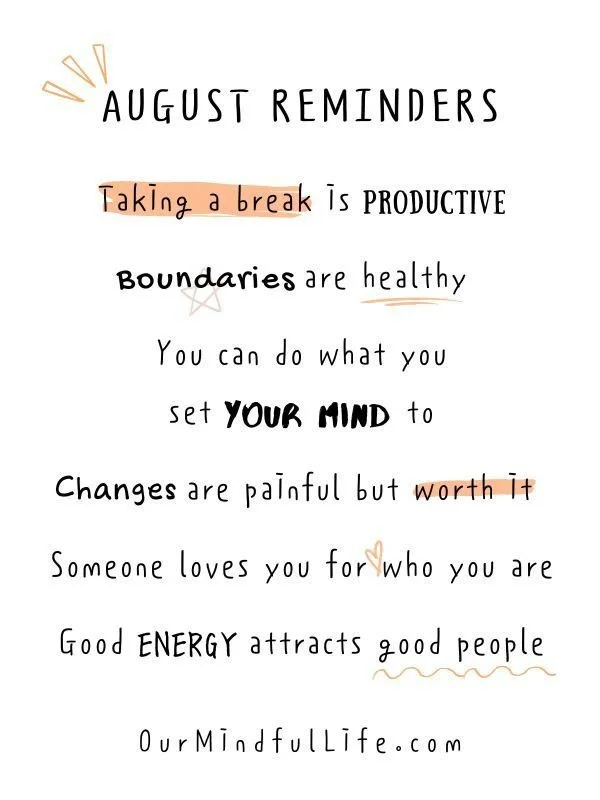
August Reminders

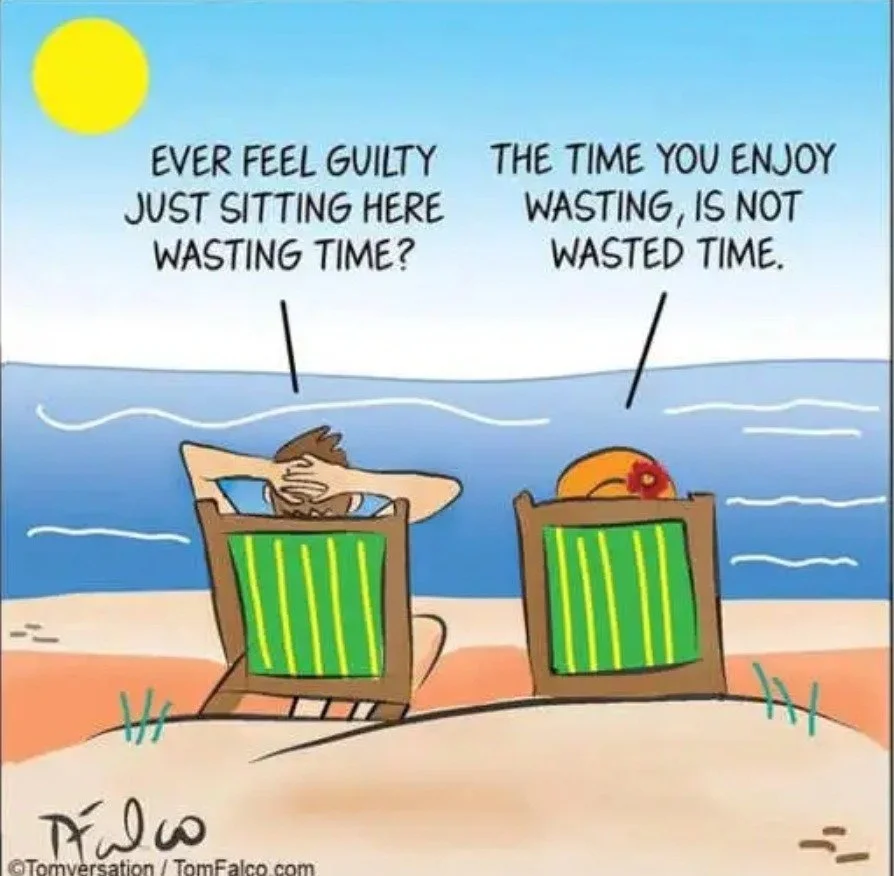
Small Joys Inventory
Take a moment to notice the small things that have brought you joy lately. Whether it’s a favorite song, a good conversation, or a quiet moment, these little bright spots can have a meaningful impact on our mental health.
A Gentle Reset for the Second Half of August
You don't need a new month, Monday, or season to make a small change.
Think about what has been working for you and what hasn't.
Choose one small adjustment that could make the rest of August feel a little better.
A reset can be as simple as getting back to a routine, making more time for yourself, or letting go of an unnecessary expectation.


International Day of Friendship
Meaningful friendships can have a powerful impact on our mental health. Feeling seen, supported, and connected can reduce stress, increase resilience, and remind us that we don't have to navigate life's challenges alone. This International Friendship Day, take a moment to celebrate the people who lift you up and consider reaching out to someone who may need that same reminder today.

Why Your Brain Keeps Replaying Conversations at 2 A.M.
Your brain isn't trying to torture you. It's trying to teach you.
Key points
Your brain replays situations because it is trying to prepare you for the future, not simply relive the past.
Uncertainty keeps social interactions mentally active long after they are over.
Transforming thoughts into reflection can reduce anxiety and strengthen resilience.
It's 2:17 a.m., and your brain has decided it's time for some serious self-reflection.
Not about tomorrow's meeting or that never-ending to-do list you will face in the morning, but about a conversation you had with a friend three days ago. All of a sudden, the exact words you used during this conversation are echoing through your mind.
You replay a joke that didn’t land. You remember the awkward thing you said and wish you could have changed it somehow. You remember the meeting where you should have spoken up.
Interestingly, each time your brain plays back that memory, it feels helpful, almost like another rehearsal of the conversation might change it somehow.
But it never does.
Most people assume this is anxiety or simply overthinking, but psychologists have a different view. Your brain is not trying to rewrite the past. Your brain is trying to prepare you for the future and to learn from past experiences to make better future decisions (Nolen-Hoeksema et al., 2008).
This distinction changes everything.
Your Brain Is a Prediction Machine
We typically think of memory as a filing cabinet. It’s a place where we store memories of things that have already occurred. Neuroscientists see memory somewhat differently. Memory is one of the most useful predictors of what will happen in the future for the brain. When our brains calculate how to make better decisions, they will go back into previous experiences (Raichle, 2015).
Each of those awkward or bad interactions becomes another piece of data. Every uncomfortable experience becomes information. Every social faux pas becomes another rehearsal for the next time you have a conversation with a friend.
Your brain asks, "What happened? What did I miss? What can I do differently next time?"
Your brain is not trying to embarrass you or keep you awake at night; instead, your brain is trying to train you.
Why Some Conversations Refuse to End
Almost a hundred years ago, psychologist Bluma Zeigarnik made an interesting observation at a café: the waiters there had excellent memories for customers who had unpaid orders, but when a customer paid their bill, the details of the order would disappear from the waiters' minds.
article continues after advertisement
This observation was later termed the “Zeigarnik effect,” which refers to the tendency to have unfinished tasks remain active in our minds because we want to complete them (Zeigarnik, 1927).
Think about an awkward conversation. When you don't know if someone misunderstood you, are concerned about having offended them, or feel like you lost out on an opportunity, your brain leaves that encounter open and unfinished, and continues cycling back to that moment over and over again because unresolved experiences consume our attention (Zeigarnik, 1927).
So your brain keeps going back to that moment.
Again.
And again.
Why Everything Gets Louder at Night
When we rest, the default mode network (DMN) in the brain is working harder than ever. This network is responsible for supporting our memory, self-reflection, the creation of imaginary situations, and creating mental simulations of what may or may not happen in the future (Raichle, 2015). Think of it like your brain's planning committee that meets overnight to get ready for the next day.
The primary purpose of the DMN is a noble one.
The DMN wants to learn.
The DMN wants to help you improve.
However, the DMN will occasionally forget to clock out.
The DMN generates repetitively negative thought patterns (also known as rumination) and is often associated with anxiety and emotional distress due to its ability to focus on issues rather than solutions (Nolen-Hoeksema et al, 2008).
A Hopeful Way Forward
When the mind replays a conversation at two in the morning, try not to listen to it again. Instead, ask a different question:
What can I learn from this situation?
Write down your answer.
Expressive writing research supports that by writing, you can better process emotions by organizing them into a structured thought pattern through the written word (Pennebaker & Smyth, 2016). By writing the experience down instead of just continually replaying what happened, your mind can start to view the situation as a completed experience rather than as a lingering experience.
article continues after advertisement
This change encourages psychological detachment; rather than focusing on the negatives, your brain can shift its focus toward the lesson learned, thereby engaging in reflection rather than rumination, which increases resilience, emotional regulation, and problem-solving skills (Watkins, 2008).
By writing down the lesson learned, you allow the Default Mode Network (DMN) to suspend its constant search process, as writing helps close the loop, completing the task of identifying potentially useful information for future use.
Be thankful for the insight learned and use the moment of writing to let go of previous regret.
Hope isn't believing you will never say the wrong thing again. Hope is trusting that one imperfect conversation cannot define your future. Because growth doesn't come from perfect words. It comes from taking the time to learn long after a conversation ends.
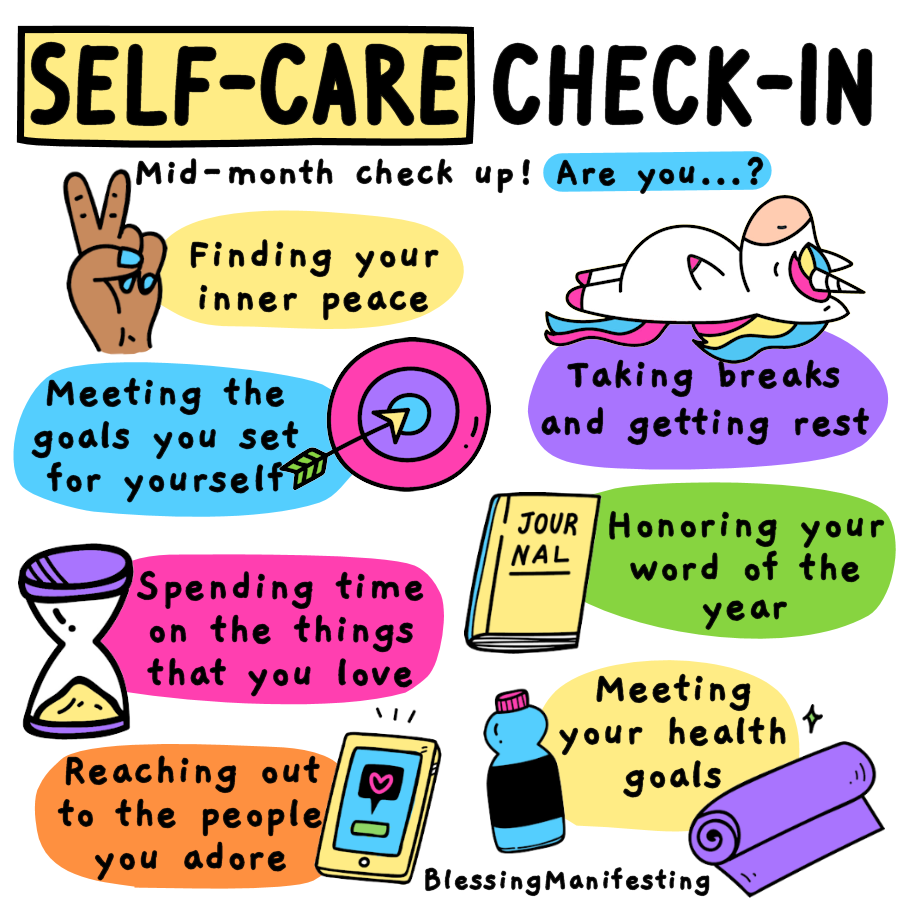
Today is International Self-Care Day! Self-care isn’t a luxury or something you only do when everything else is done—it’s a daily way of supporting your well-being in small, meaningful ways. On International Self-Care Day, it’s a reminder that caring for yourself can be simple, realistic, and built into the rhythm of your everyday life.